

World Recycling Day serves as a powerful reminder that what we throw away is often just a resource waiting for its second life.
As cities grow and consumption increases, the way we manage waste has become one of the defining environmental challenges of our time. Recycling plays a crucial role in addressing this challenge and requires more than just good intentions – it requires smart public infrastructure.
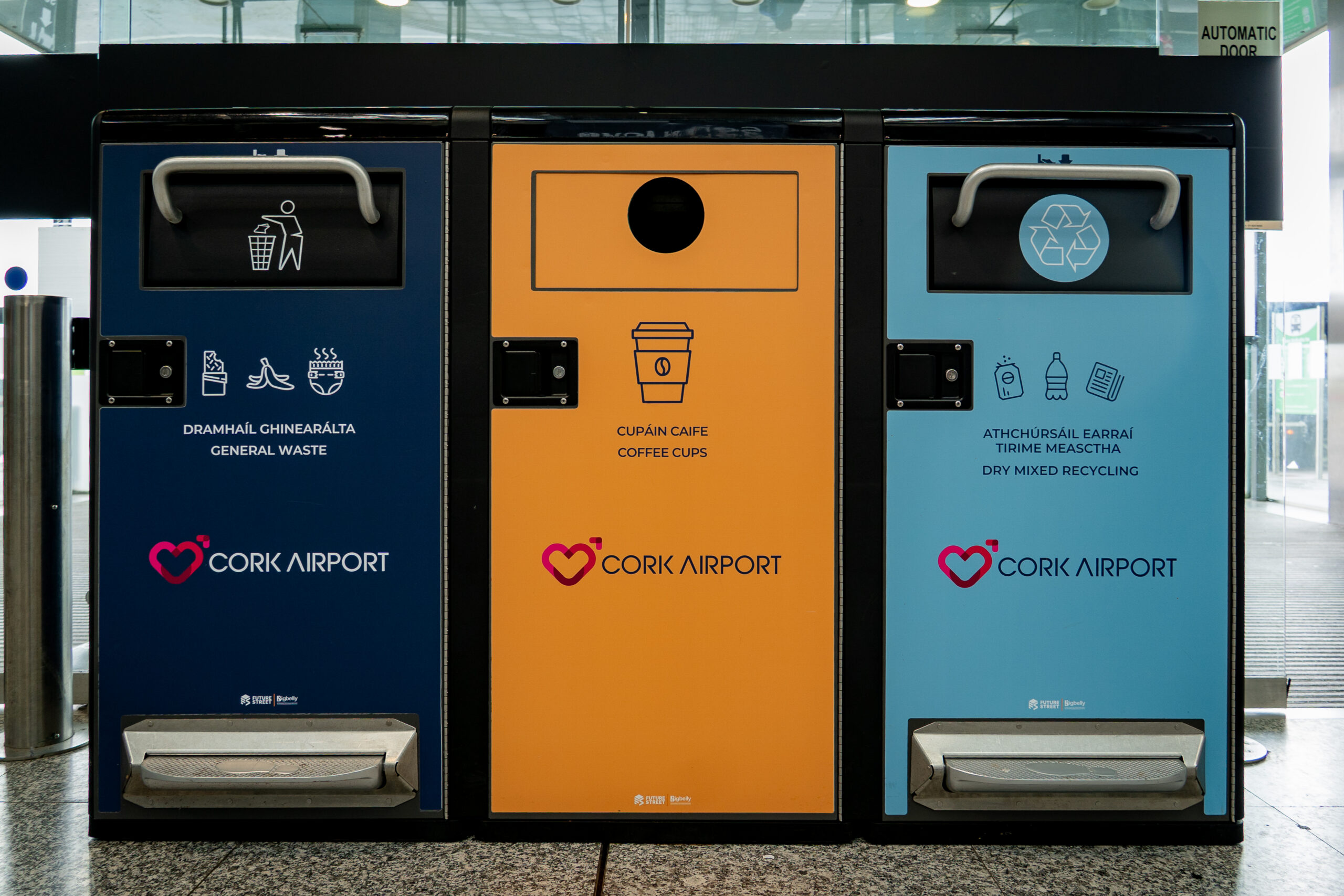
Ahead of World Recycling Day 2026, we had the pleasure of meeting with Cork Airport to discuss the impact of our Bigbelly bins in the Airport, including our bespoke CoffeeBelly.
Cork Airport provides both waste and recycling points throughout the terminal and across the airport grounds, alongside dedicated bins specifically for coffee cup disposal. The introduction of these smart units has significantly improved the airport’s waste and recycling management.
By offering clearly designated disposal points, Cork Airport is helping to reduce contamination while encouraging more responsible recycling habits among passengers and staff alike.
The “Convenience Gap” in Sustainable Living
Creating a culture of recycling doesn’t happen through awareness campaigns alone. It starts by making the right choice the easiest choice. If a person has to walk and walk to search for a specific bin to dispose of a coffee cup responsibly, the likelihood of that item ending up in a landfill significantly increases.
For recycling systems to work effectively, materials must be sorted correctly at the point of disposal. When recycling options are visible, accessible, and well-labeled, we remove the friction that prevents people from participating in the circular economy.
How Smart Infrastructure Changes the Game
While recycling at home is widely encouraged, public spaces often present a challenge. By integrating solutions like Bigbelly bins with dedicated recycling streams (food waste, bottles/cans, coffee cups and pizza) into our public spaces, we are doing more than just collecting litter; we are guiding public behavior.
Bigbelly bins support recycling and the circular economy in several ways:
- Clear Waste Separation
Dedicated compartments for recycling and general waste help people sort their waste correctly from the start. This reduces contamination and improves the quality of recyclable materials
- Intuitive Design
Clear labeling, colour coding, and thoughtful placement make it obvious where items should go, helping people make the right choice quickly.
- Smarter Waste Management
Smart bins provide data that helps cities manage collection routes more efficiently, further reducing the carbon footprint of waste management.
Moving Toward a Circular Future
When recycling is well-designed, it becomes a seamless part of urban life. People participate when they feel their actions are effective and supported by the environment around them.
By investing in accessible recycling infrastructure and encouraging responsible habits, communities take meaningful steps toward this circular model.
World Recycling Day is a reminder that progress doesn’t come from one single solution. It comes from the combination of individual actions, thoughtful design, and long-term investment in sustainable systems.
“Bigbelly bins help us to work smarter, stay cleaner and move closer to our sustainability goals, all while improving the experience for our passengers. It’s another positive and sustainable step forward for Cork Airport.”
Ready for Less Litter, More Efficiency?
Find out how Future Street’s smart bins reduce litter, streamline collections, and improve public spaces. It’s easier than you think—start the conversation today.
Related Articles
A Smarter Future for the Granite City: Smart Bins Hit the Streets of Aberdeen
Following a successful 3-month trial back in 2011, Aberdeen City Council decided to roll-out 83 Bigbelly smart bins in...
Smart Bins Make a Splash on the Baltic Sea: Sustainable Innovation at Ostsee Resort Damp
We’re delighted to celebrate the successful installation of 30 Bigbelly Smart Max stations at the beautiful Ostsee...

The Wild Side of Sustainability: Belfast Zoo’s Commitment to Improved Visitor Experience and Cleaner Public Spaces
As one of Northern Ireland’s leading visitor attractions, and the home to over 100 different species, Belfast Zoo is...