
How Bigbelly bins are helping hospital waste management at Royal United Hospital Bath
Future Street are proud to continue to support Royal United Hospital Bath NHS in their drive to keep their hospital cleaner, safer and more sustainable.
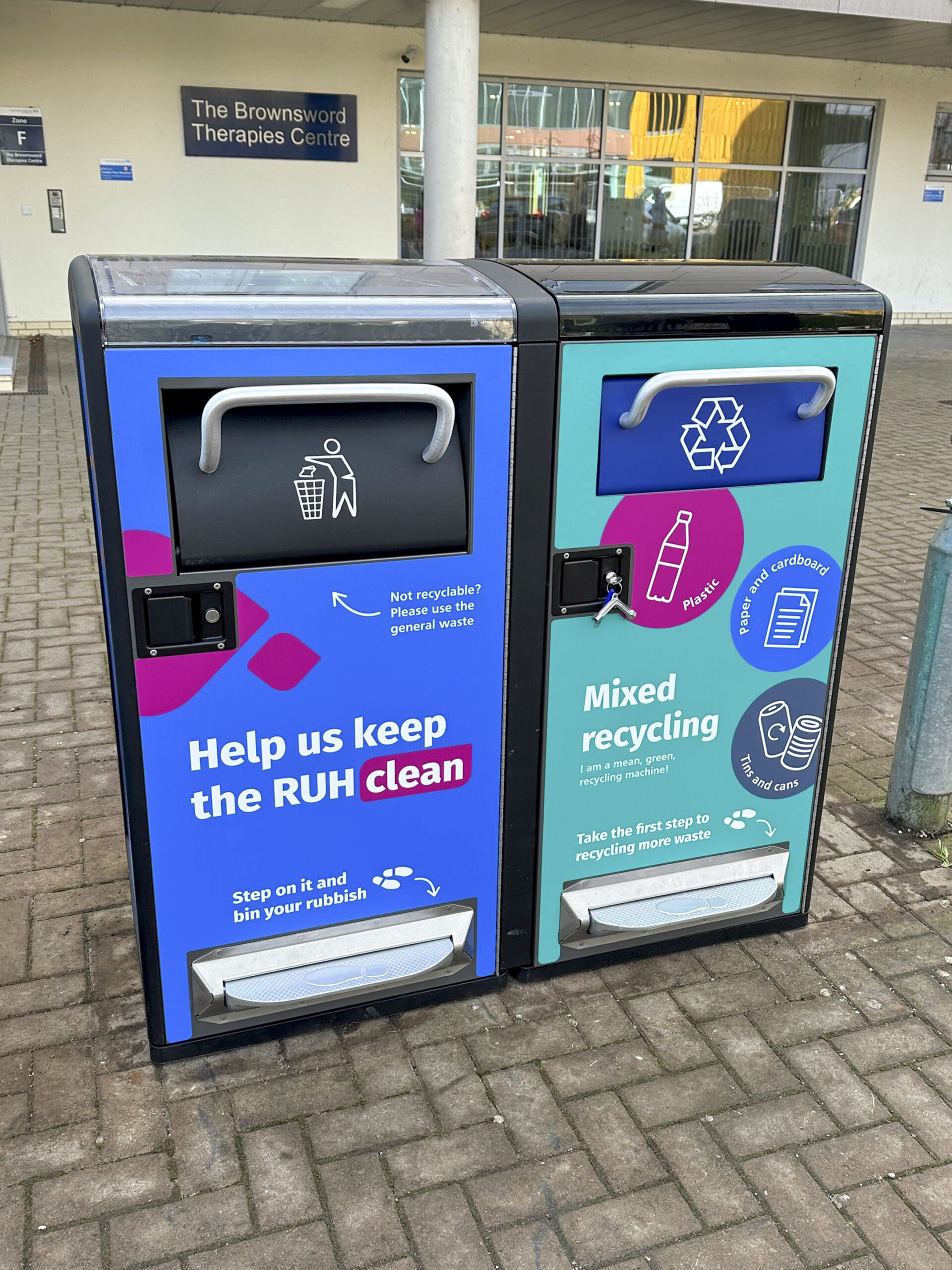
Hospitals are busy operations, and all the moving parts need to fit, so having a robust, efficient and, most importantly, time-saving waste management solution on site is crucial. The team at Royal United Hospital are already seeing the benefit of using our Bigbelly smart bins.
What started in January 2024 with a 3-unit trial has now turned into a bigger operation. The reasons for this expansion remain clear – it’s working, it’s effective, and it’s making day-to-day operations easier.
Smarter Waste, Less Hassle
Nicky Baker, the Waste & Recycling Manager at RUH, said of the project:
“We are really pleased with how our Bigbelly units have performed for us. They help us better manage our waste as we can monitor the fullness status of each Bigbelly unit, and we also get alerts when they are nearly full.
Due to their smart compaction, our Bigbelly units hold around five times as much waste as a normal litter bin, so we don’t have to empty the units as often as we did our old bins. Since installing the system in January 2024, we have reduced our collections by 89% which has given us back 197 operational hours, freeing up our time to focus our resources on other key Estates issues.”
Key Benefits of Bigbelly at Royal United Hospital
- 5x more waste capacity
- Solar compacting technology
- CLEAN software data to guide smarter operational decisions
- An all-around cleaner, greener, better hospital environment for everyone — from patients to staff to visitors
- Cleaner Grounds, Fewer Pests
Nicky went on to explain what she values most about the system:
“One of the less technical but equally important aspects of the Bigbelly is that all litter deposited in the unit is securely held inside. As such, we no longer have wind-blown litter from our bins, which is fantastic for the safety of local nature and the general environment around our hospital estate. But this also eradicates pest activity in and around the Bigbelly units, which has a significantly beneficial impact on our infection control management.”
A Broader NHS Impact
Future Street has proudly supported NHS hospitals across the UK since 2008, delivering sustainable waste systems for hospitals through smart bin technology.
The NHS Waste Strategy directly references the onsite compaction of waste as a desirable approach for improving environmental impact and operational efficiency and Bigbelly continues to help make that a reality.
Whether it’s reducing waste collections, improving recycling performance, or keeping estates pest-free, Bigbelly offers an intelligent, scalable solution for hospitals and other healthcare environments.
What’s Next?
Nicky continued:
“We decided to install both General Waste and Recyclable Bigbelly bins, and these have been a real asset in increasing our Dry Mixed Recycling levels to 31% of all public litter collected.
Like most organisations in England, we’ve had to manage the new recycling legislation that came into effect back in the spring, and we are currently looking at Bigbelly as a public food waste solution as well. We will also use the Bigbelly CLEAN Management software to create a map of all our bin locations”
A Cleaner, Smarter NHS
From enhanced recycling and fewer waste collections to pest control and real-time data monitoring, Bigbelly is redefining hospital waste management at Royal United Hospital and across the NHS.
Looking to explore smart bins for healthcare environments? Get in touch with Future Street to learn more about our hospital-ready solutions.
Ready for Less Litter, More Efficiency?
Find out how Future Street’s smart bins reduce litter, streamline collections, and improve public spaces. It’s easier than you think—start the conversation today.
Related Articles
Welcome to the City of Rennes!
We are proud of this new installation of two Bigbelly 240L units right in the heart of the city!...
Crushing It in the Steel City: Sheffield’s New Bigbelly bins!
We are absolutely thrilled to announce our latest partnership with Sheffield City Council and Amey. This month, we are...
The Future Street Team Takes Madrid!
Our teams from all over Europe descended on Madrid for our annual sales meeting to align our vision for the future (This involved cake)